In 1808, under the direction of Bishop Flaget, the diocese of Bardstown was established as the first Catholic cathedral west of the Allegheny Mountains. St. Joseph Proto Cathedral was consecrated in 1819.
Three other dioceses were established at the same time in New York City, Boston and Philadelphia. The cathedral stands on 17-inch thick yellow poplar columns and is held together by wooden pegs.
Pope Leo XII as well as the King of Sicily donated large oil paintings to honor the cathedral. Unfortunately, time has severely darkened the paintings. The original oil lamps have been turned upside down and are powered by electricity. The cathedral has been raised to a basilica based upon its history.
Behind the church is the Oscar Getz Museum of Whiskey History. Originally the Spalding Hall of St. Joseph’s, it is filled with bourbon memorabilia including regular and miniature bottles, jugs, stills, and serving trays. It also has a spot to “honor” Carrie Nation.
A Percheron horse drawn carriage was our means of touring historic Bardstown. Most of the buildings and homes date back to the 1700 and 1800s. Some families have continued to reside in these homes for four generations.
The Court House was built in 1892. The old jail is now an inn but still has stocks ready for miscreants.
Our afternoon was free to wander as we pleased. Some visited the craft fair, some bought jewelry, and some sat on red stools enjoying the treats of an old-fashioned soda fountain.
Saturday night became date night when everyone changed out of their everyday clothes and put on their finest for dinner and a ride on My Old Kentucky Dinner Train.
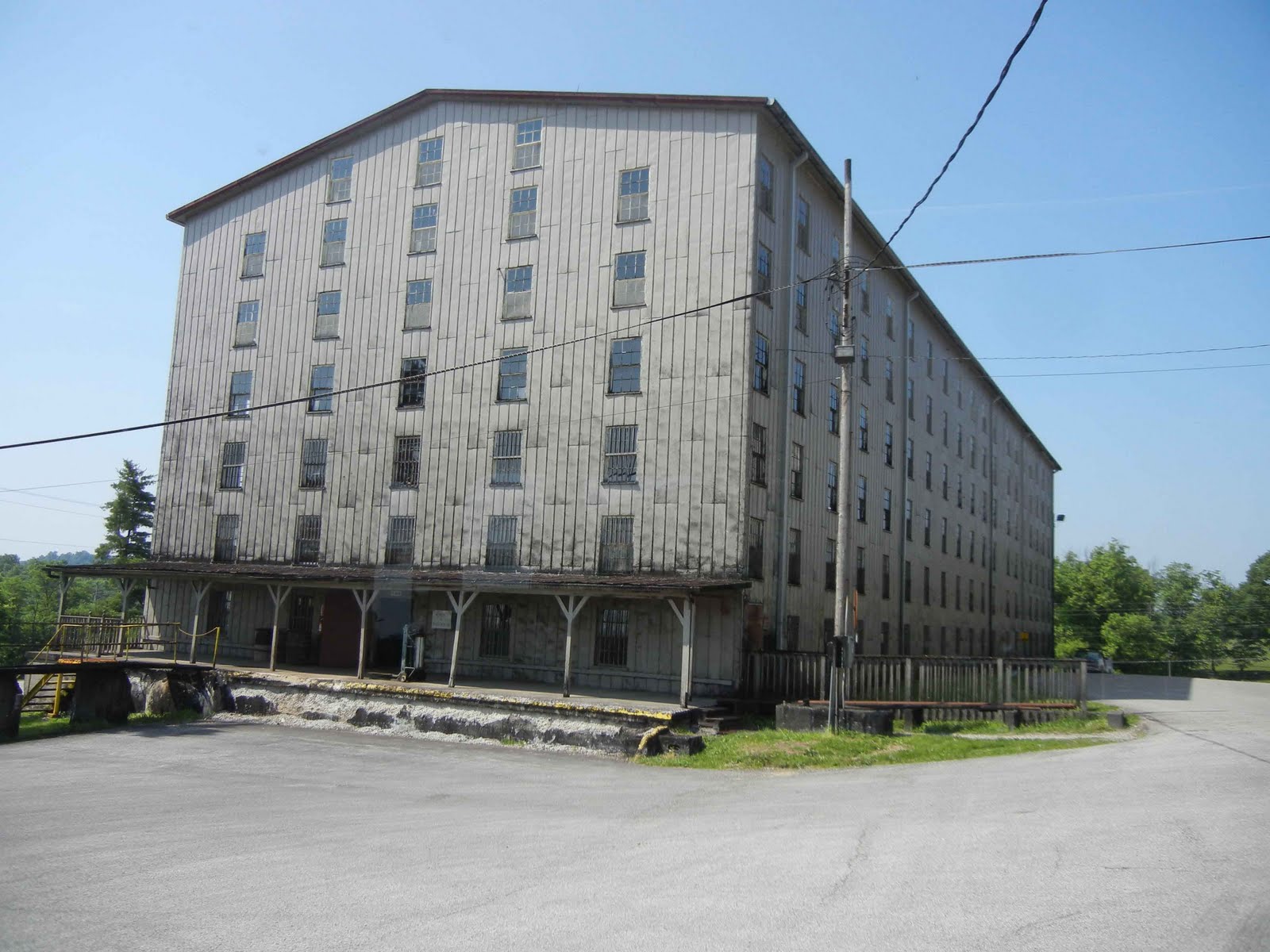
Our trip to Limestone Spring Junction and back took us passed forests, bonded bourbon warehouses, homes and fields of corn. As we gently rolled along, we enjoyed a delicious dinner and great service. We liked our dates too.
Monacos in Motion, the caravan club led by members for members, explores the Kentucky Bourbon Trail and other locations for two weeks in June 2011. As our leaders suggest, we must bring a thirst for knowledge or, at least, a thirst. Come join us in this adventure.
Sunday, 12 June 2011
Friday, 10 June 2011
Moving On
It takes some coordination to move 15 eighteen-ton motor homes and their tow cars to a new location. We do it in waves, four to five coaches at a time so that we don’t clog the highways and byways. Our communication is via family radio (aka walkie talkies). This is how we traveled to Bardstown and settled into our new campground.
We have not mentioned weather. It is hot and humid. After arriving, most of us were grateful for a chance to unwind in our motor homes. However, we had one task to take care of. When we go to distilleries, we get a “passport stamp.” When we have filled in each of the six spaces, we will have earned a tee shirt with the names of the distilleries. For reasons not worth mentioning, we each had to get to Heaven Hill on our own and not as a group. There we passed on the tour but enjoyed a wonderful tasting of two excellent bourbons. The man in charge of the tasting had us sniff then add a couple of drops of water making bourbon and branch water. Then we savored the flavor.
The tasting ended with a luscious bourbon ball. After visiting their shop, we were free for the rest of the day. In the evening, we gathered for dinner and the second round of our “horse race.”
The next morning we headed out for a real horse race. After a short shopping spree at a Louisville package store, we went to Churchill Downs. A bronze statue of Barbaro greets visitors to the Derby Museum.
Our visit started with The Greatest Race, a movie about the thrill of the Kentucky Derby. We then toured the grounds, walking by the paddocks and under signs of Derby winners. The old Jockey Club is the oldest building in the complex. We saw the statue of Pat Day, who won the most races ever, over 2400 including one Derby. Our guide described the excitement that can only be understood by being present on Derby Day.
Started in 1875 by M. Lewis Clark, grandson of the explorer, it became a premier race under the leadership of Matt Winn. In 2011 165,000 people attended the race. During the rest of the year 14 horses may run a race, in the Derby 20 three-year olds race.
We then wandered around the museum seeing displays of the ubiquitous hats and lists of the most honored jockeys, trainers, grooms and owners.
A display showing fancy clothing included the dress worn by Pat Cherney, owner of Secretriat.
There are special sections in the museum for farriers, fillies and the most famous jockey of all Willie Shoemaker. For those of us so inclined, there was a chance to simulate riding in a horse race.
We had tables reserved for us to enjoy a buffet lunch in Millionaires Row.
During the three-day Derby weekend, it costs $60,000 for a seat license plus $1000 each for eight seats at a table. We got in for a minute fraction of that. From the patio outside we had an excellent view of the races. Some of our group were winners and some were not so lucky, but that’s horse racing.
Wednesday, 8 June 2011
More Frankfort
After days of learning about the importance of corn in bourbon and stallions on horse farms, our journey continues with the nickname Corn and Porn bestowed by a member whose name begins with R and who makes great pralines.
We had a wonderful tour of Claiborne Farms led by Tony, a trainer and race horse owner. The farm is rightfully proud of its stallions. They include Blame, a Breeder’s Cup winner famous for ending Zenyatta’s 19-race winning streak. He is considered the second best horse in the world. (Google will tell you who and where the best is.)
The farm’s stallions have been successful at racing and at siring. Sixty-three stallions from the farm have won the Kentucky Derby, Preakness or Belmont. It has been home to six of the eleven Triple Crown Winners. One stallion, Mr. Prospector’s progeny earned $1 billion in winnings.
Among the horses that have sired on the farm are Secretariat and Seabiscuit. Secretariat is buried here as is Swale, the only Derby winner bred and buried at Claiborne (others were bred somewhere else).
Gallant Fox, the only horse to win the Preakness before the Derby is buried near his son Omaha; they are the only father/son Derby winners. Seabiscuit, though he was stud here, died and is buried on another farm and is remembered here with a statue.
Our lunch was catered at Buffalo Trace Distillery. Opened in 1881, it has been in continuous operation ever since. During the Depression, their bourbon and that of three other distilleries in the nation was sold for medicinal use. A prescription was good for one pint every ten days. They remain a small company producing 20,000 cases a year. The distillery is located near a bend in the Kentucky River where Lewis and Clark ran aground. This was an area full of buffalo which led to the name Buffalo Trace (Road).
They use five recipes from 50 bourbons to blend their bourbons which are aged from 12 - 23 years. We watched the application of a hot wax seal on $50 bottles of Blanton’s Single Barrel.
Warehouse C is one of thirteen warehouses and contains 24,000 barrels including OFC barrels that he tricked at least one of us into believing stood for Only For Catholics (actually Old Fire Copper).
Our tastings, shared per couple, were of Rain, a delicious vodka, Buffalo Trace and Eagle Rare bourbons and Bourbon Cream, like Bailey’s Irish Cream.
Kentucky has quite a bond with France because of its support during the American Revolution. The capital Frankfort was named for France. Other “French” cities are Paris, Louisville, and Versailles (mispronounced ver Sales). And then there is the famous region of Bourbon where we have been staying.
As we leave Frankfort, we want to show you a bit of what we have passed during our travels. The country roads of Kentucky are lined with stack fences. Originally built by slaves who collected the stones and built the fences without mortar. Over the past hundred plus years they fell into ruin and are now being re-stacked. They do add charm to the roads.

Some of the barns in the area have quilts painted on their sides. We thought the one on a local school most apt.
The old Court House building in town is topped by Lady Justice. The buildings on the main street are antebellum.
Here’s a bit more about us. We are 15 mostly retired couples. Twelve of us have been teachers, others farmers, entrepreneurs, scientists, and a lawyer. Most of us started out in tents, moved up to tent trailers or Class C’s and are on our second, third or more motor homes. Since we are Monaco in Motion, we now all travel in Monaco Motor Homes. Collectively, we have been to all the states and throughout most of Canada.
We had a wonderful tour of Claiborne Farms led by Tony, a trainer and race horse owner. The farm is rightfully proud of its stallions. They include Blame, a Breeder’s Cup winner famous for ending Zenyatta’s 19-race winning streak. He is considered the second best horse in the world. (Google will tell you who and where the best is.)
The farm’s stallions have been successful at racing and at siring. Sixty-three stallions from the farm have won the Kentucky Derby, Preakness or Belmont. It has been home to six of the eleven Triple Crown Winners. One stallion, Mr. Prospector’s progeny earned $1 billion in winnings.
Among the horses that have sired on the farm are Secretariat and Seabiscuit. Secretariat is buried here as is Swale, the only Derby winner bred and buried at Claiborne (others were bred somewhere else).
Gallant Fox, the only horse to win the Preakness before the Derby is buried near his son Omaha; they are the only father/son Derby winners. Seabiscuit, though he was stud here, died and is buried on another farm and is remembered here with a statue.Our lunch was catered at Buffalo Trace Distillery. Opened in 1881, it has been in continuous operation ever since. During the Depression, their bourbon and that of three other distilleries in the nation was sold for medicinal use. A prescription was good for one pint every ten days. They remain a small company producing 20,000 cases a year. The distillery is located near a bend in the Kentucky River where Lewis and Clark ran aground. This was an area full of buffalo which led to the name Buffalo Trace (Road).
They use five recipes from 50 bourbons to blend their bourbons which are aged from 12 - 23 years. We watched the application of a hot wax seal on $50 bottles of Blanton’s Single Barrel.
Warehouse C is one of thirteen warehouses and contains 24,000 barrels including OFC barrels that he tricked at least one of us into believing stood for Only For Catholics (actually Old Fire Copper).
Our tastings, shared per couple, were of Rain, a delicious vodka, Buffalo Trace and Eagle Rare bourbons and Bourbon Cream, like Bailey’s Irish Cream.
Kentucky has quite a bond with France because of its support during the American Revolution. The capital Frankfort was named for France. Other “French” cities are Paris, Louisville, and Versailles (mispronounced ver Sales). And then there is the famous region of Bourbon where we have been staying.
As we leave Frankfort, we want to show you a bit of what we have passed during our travels. The country roads of Kentucky are lined with stack fences. Originally built by slaves who collected the stones and built the fences without mortar. Over the past hundred plus years they fell into ruin and are now being re-stacked. They do add charm to the roads.

Some of the barns in the area have quilts painted on their sides. We thought the one on a local school most apt.
The old Court House building in town is topped by Lady Justice. The buildings on the main street are antebellum.
Here’s a bit more about us. We are 15 mostly retired couples. Twelve of us have been teachers, others farmers, entrepreneurs, scientists, and a lawyer. Most of us started out in tents, moved up to tent trailers or Class C’s and are on our second, third or more motor homes. Since we are Monaco in Motion, we now all travel in Monaco Motor Homes. Collectively, we have been to all the states and throughout most of Canada.
Tuesday, 7 June 2011
More S’ing and T’ing
We have found a new way to start the morning. Forget breakfast and go to Woodford Reserve for their chocolate bourbon balls. Then continue the bourbon theme the rest of the morning like we did.
Started in 1812, Labrot & Graham’s Woodford Reserve was built by Elijah Pepper. It was James Crow who made the distilling of bourbon a true science. Closed for many years, the distillery reopened in 1993 with a production of only 105-110 barrels a week.
Woodford is unique in several ways. They use a triple distilling process. The sour mash is moved from copper still to copper still going through the stages of beer still, high wine to spirit still which is up to 158 proof. Their distinct flavor comes from the use of both a pot still and column still.
They make their own barrels. They add water that has seeped through limestone. Their yeast arrives frozen from their labs in Louisville and is mixed in cypress fermenters.
We were given a chance to sniff the eye-stinging barrel proof distillate. We found a better aroma, known as angel share, in the five-level aging facility.
Best of all was the tasting of the bourbon and learning that adding ice makes the taste sweeter.
After lunch on Woodford’s patio, we went tripping to Three Chimney Farm. There we found a different aroma, hay, grass, and horse. The farm has three divisions, brood mares, stallions, and yearlings. We visited the stallion paddock where each of the six stallions has his own stall; outside they have their own paddock. The stallions are kept separate because they will fight. This horse, Point Given, won two parts of the triple crown but missed with the Kentucky Derby. Still a beautiful animal.
Twenty-six-year-old Dynaformer is the lead money stallion on the farm earning $150,000 per act and has sired offspring who have earned $89 million. His most famous progeny is Barbaro.
The receiving barn is for the brood mare. Before going to the stallion, her papers and identification are thoroughly checked and she is examined to be sure she is healthy and ready to breed. A teaser horse greets her to make her interested and performs a preliminary, but not consummated, mating. Her tail is wrapped in gauze and her hind feet are put in padded shoes. Five people assist in the process of breeding, making sure neither horse is injured and that the act does take place. We were able to watch the act and it was quite brief but no pictures..
This farm was home to Seattle Slew until his final illness. He earned $500,000 per stud.
The barns were built by the Amish in keeping with the age of the farm.
Our drive throughout the day was through the green rolling hills of Kentucky passing lovely homes and stables. We saw stallions, mares and foals.
Monday, 6 June 2011
Sippin
Our caravan is on a serious study of bourbon so we started with a master class in this unique American beverage. Jimmy Russell is the Master Distiller of Wild Turkey in the “true American spirit that was born in Bourbon County, Kentucky.” He has worked there since 1954 and has been honored with a bourbon bearing his name (see below). Kentucky distills 95% of the world’s bourbon.
From him we learned that, by law, bourbon must be 51% corn; rye and barley malt come next. The maximum proof must be 160. No flavor or color may be added. Each batch is aged in new oak barrels for a minimum of five years. The old barrels are used for wine and scotch.
Jimmy is an educator who understands that hands on lessons are most effective so he brought six bourbons for a vertical tasting (Andrea wanted to know how much vertical we had to drink to find ourselves horizontal.) The bourbons we tasted increased in proof and smoothness. They were 101, Single Barrel, Rare Breed, Russell’s Reserve, Rye Whiskey, and American Honey. The last was sweet like a late harvest wine. Russell’s Reserve is Jimmy’s and we will be purchasing autographed copies of his label (and the bourbon too).
Expanding on Jimmy’s lesson, we made Wild Turkey our first stop on the Bourbon Trail.
Wild Turkey claims its secret to success is one yeast (over fifty years old), one recipe and one oak. They also use water from the Kentucky River. There our guide took us to the Fermentation Vats each holding 30,000 gallons of mash where the first thing we noticed was the strong scent of the yeast that targets the sugar releasing 6.5% alcohol and carbon dioxide. This process takes three days. The heat of the Still House separates more alcohol out to 130 proof, a clear liquid they call white dog. This is poured into charred oak barrels in the Cistern Room. Each barrel holds 53 gallons, one/third of which is lost during the six to twelve year aging process. The barrels are stored in tall warehouses which hold from 15,000 to 20,000 barrels each. Each barrel remains in place during its aging process. The varieties of bourbon are due to the natural rise and fall of heat and cold during the year and the height that the barrel is kept in the warehouse.
After our picnic lunch, we went to our next stop Four Roses which has been in operation since 1888. The romantic story of the name comes from founder Paul Jones, Junior’s attempts to propose. His future wife finally indicated she would marry him by wearing a corsage of four red roses.
Four Roses’ process is the same and yet different. They get their corn from Indiana (no genetic modified allowed), rye from Germany and barley in the USA. They distill twice to increase fermentation. Their water is from the Salt River. The bourbon is aged in single story buildings and each barrel is labeled with its location. They make ten batches which they blend into four labeled products. They also bottle to order from these barrels. When it was owned by Seagram’s, the bourbon was not sold in the US. New ownership sells to all but three states now.
Our guide said the best test for their corn was how it smells. The word for this is organoleptic. She had us use this test when we tasted three of their labels, Yellow Label which has all ten batches and is 80 proof, Small Batch which uses four batches and is 90 proof, and Single Barrel which is labeled with its exact barrel and is 100 proof.
After our day of responsible sipping,
we dined on salad, chicken and broccoli casserole, strawberry short cake and chocolate goodies made by our leader Ellen. Oh, and the bar is always open for those who want to sit back and relax. Our evening’s entertainment was horse racing. Horse #6 won two races earning its owners several quarters.
Subscribe to:
Posts (Atom)